Fiction
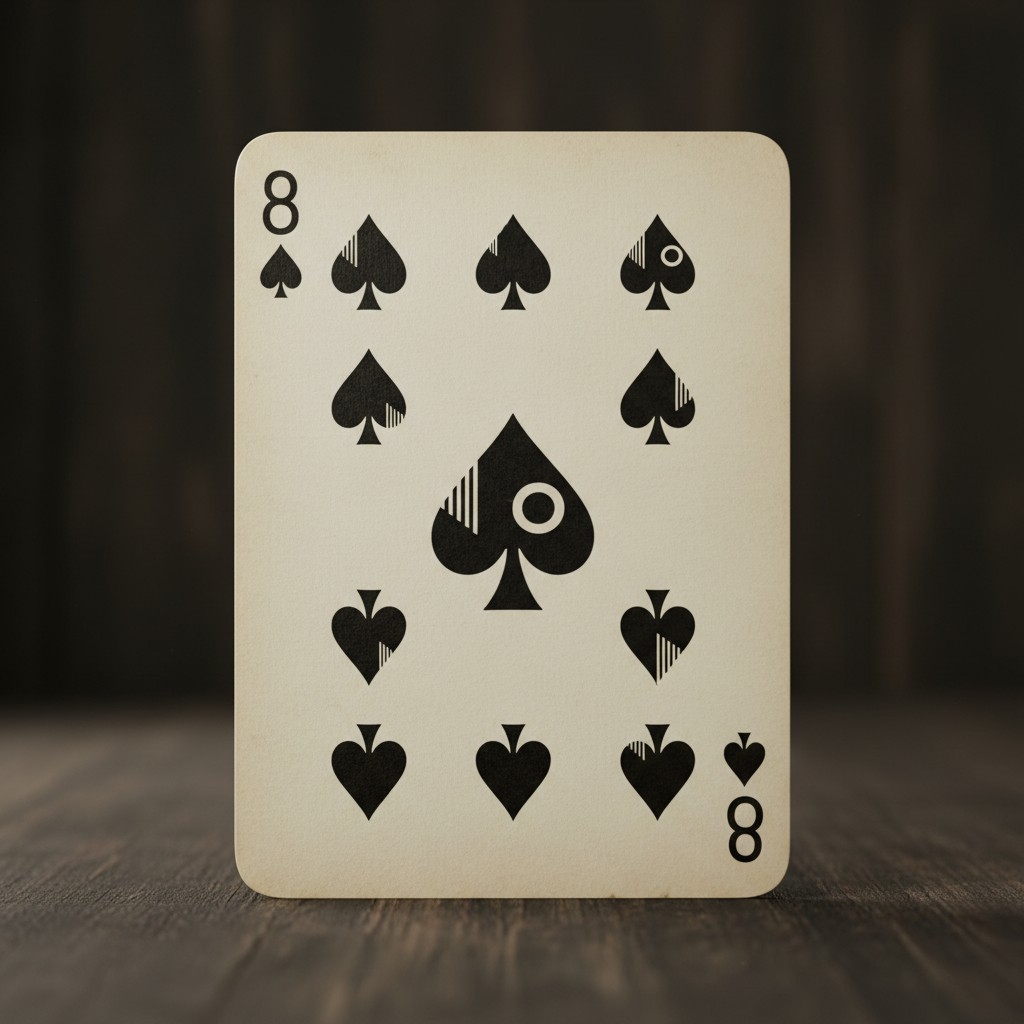
Crazy Eights
I spent most summers in Day Care, until my dad got fired. After that, I spent them looking out a top-floor window, watching kids bike down the street. I learned that shame is hottest behind drawn shades in August. But after a while, it fades like wallpaper, and so do your expectations. You stop caring that peeling, off-beige paint exposes you to the neighborhood. So you go ahead and expose your own defects. Except for a few secrets you still keep.
We lived in the shadow of large walnut trees, overgrown for a century. They crowded the sun like peevish old men, darkening the hottest afternoons. My father spent his days in the shade of the den, to the thrum of the A/C unit and pirated Cinemax. His briefcase sat on the table, shut tight.
When I grew bored of library books, I would sit with him. We watched stolen movies, meant for rich people who could afford cable. Dirty Dancing, Lethal Weapon, Peggy Sue Got Married—none of which Mom would let me see. We also watched older films: black and white, oddly sinister. Like the one where a woman goes crazy, and white-hatted nurses rub gel wands on her head before jolting her with an electroshock machine.
If I parted the damask curtains, I could see the bank sign down the street, blinking the temperature obsessively. 101F. 102F. 104F. After days of fixating on its flashing incredulity, I began to imagine walking outside, to experience a weight or perhaps a danger. It seemed better than hiding in the shadows. And so, one day, I decided to go out.
“I’m going outside,” I announced, not expecting an answer. Outside was where normal kids belonged—not strange ones liked me, who had to silence the stories in their heads.
The weekday street was listless and still. I squatted on the grass of our dandelion-decked lawn and squinted at the over-exposed sky. It was hot. I closed my eyes, feeling the temperature in a kind of ramped up distortion of the familiar. Then I heard the sounds too late. The parade came down the pavement, bike wheels crick-clattering to a soft, tennis shoe march.
“Stop!” someone called. It was Candi Carter, her French braid swinging in front of the group like a scarlet standard. She halted, and all the wheels whirred to a standstill.
Candi said: “I didn’t know you were home today.”
Four mounted faces confronted me with sweaty curiosity. I snuck a look at Candi’s brother Jack, because Mom was always calling him “adorable.” I had yet to think a boy was anything but unruly, but I kept an open mind.
Candi did not wait for my verdict.
“Go get your bike,” she urged. “We’re riding down to Burger Boy.”
They all stared down at me. I looked longingly at Candi’s shiny Schwinn that matched her braid; the boys’ sleek, powerful racing bikes; little Bridget O’Donnell’s tasseled Strawberry Shortcake banana seat. Then I focused my eyes on the dust-smoked pavement, and I lied real quick.
“I can’t. I’m doing chores.”
“Out here?” asked Chris Gerken incredulously.
“No.” I rolled my eyes. “I came out for a break. I wanted to see what a heat wave felt like.”
Candi began to sing and dance on her bike. “It’s like a heat wave.” We all laughed.
“You never come outside,” Chris accused. “How come?”
“Because she’s up in her room reading or drawing,” answered Jack Carter.
I stared at him until his face turned the color of Candi’s hair.
“Well, that’s what my mom says. She says you’re up in your room, reading or drawing.”
Then I got mad, because he sounded like I was doing weird stuff, like putting people in madhouses. Things you’d see in a black-and-white movie. Besides, it simply wasn’t true. I rode scooters with Candi on a regular basis. And all I could really draw was my name in bubble letters. Why had Mrs. Carter said these things? I read books and I wrote a lot of stories. They won awards at school. But even at ten, I knew about certain people. When they called you “gifted,” they didn’t see it as a gift.
“Whatever, Jack,” Candi said impatiently. “Are you coming?” she asked me.
I shook my head.
“Okay,” she shrugged. “Maybe I’ll see you later.”
And with that, the kids mounted in sequence like acrobats on a wire. I watched them whir downhill with Candi leading the way—wistful for the way, I imagined, a bicycle stirs a breeze.
I trudged up the lawn, my Reeboks too small from last year. Turning the handle on the screen door, I let myself in to see movie lights flickering in the darkened parlor. But I didn’t want to watch. Instead, I climbed the curved staircase to my room and decided to give drawing a try. My ice cream cones looked like electroshock wands.
***
The next day dawned all over the news: 8/8/88. “Crazy Eights,” one headline read. I wished I’d thought of that. Crazy Eights was my favorite game; I used to play with my real dad before he moved to Florida, to a town that meant “Rat’s Mouth,” which is what I liked to call him because I hadn’t heard from him since.
Crazy Eights meant auspicious events, luckier than a round of cards. By noon, the bank’s light-bright thermometer read 106F. I felt dared by the extremes of nature’s making. I wanted to play my hand against whatever stacked against me. I decided 8/8/88 would be the day the world and I matched wits.
Donning chartreuse spandex, I roped my hair into a long braid and added a loud pink sweatband. Then I knotted my Reeboks, grabbed a latchkey and advanced downstairs. Behind the parlor door, the television and A/C seemed in danger of blowing their shared fuse.
I stopped at the bottom of the stairs, because I recognized what movie was playing. It was A Streetcar Named Desire again—the second time that week. Maybe he hadn’t been paying attention the first time. I felt sick just thinking about it. Shoving the front door open, I ran outside into the yard.
My shoes crunched on dry grass, shriveled from extreme temperatures. Against the worn, weak sky, our block of Victorian homes slumped languidly down the street like profligate painted ladies.
A gravel driveway stretched beside our house, rocks crushed to smoky dust and rising like steam. I took this path, stepping on my shadow; watching as a tiny braid and stilt-looking legs preceded me. At the end of the narrow drive, the old carriage house squatted with a snapped weathervane and sloping shingles.
We weren’t allowed to use the carriage house anymore. Not as a real garage. Not since the city of Jackson’s Hill declared it “structurally unsound.” Dad had promised to renovate it this summer, but even into August, his tools sat blindly inside the shed, mocking the structure they were intended to fix.
I threw open the door. A pack of router bits rolled off their shelf, spilling on boxes labeled “California”and “Jesse James.” A pretty purple scooter hung from a nearby ceiling beam—my prized birthday gift from last summer. Already, I’d grown tired of its limited capabilities; I wheeled it to the driveway’s edge, thoughts spinning in tandem, trying to reckon what I’d missed.
From the top of the hill, I saw the usual drop. I always rode carefully, tentative; my hand protecting the brake, my foot grounding every few paces. But today something was different. I had spent too much time alone, with nothing to do. Gradually, the world had pulled away from me and left me with only myself and an unlucky heat, which dared me to light a match and watch everything that weighed on me go up in flames or dust.
I decided to push off and not stop.
I swung both feet up, coasting down the bumps and ridges of the chalky, broken sidewalk. I felt myself pick up speed; I shut my eyes as I passed Chris Gerken’s house, with fleeting thoughts of coming through his window and hitting him in the face; I was going so fast I wobbled past the Carters’ at a rate that simulated a roller coaster; but I would not under any circumstance put my foot down; my eyes stayed on the street in front of me, my feet firmly set to the base, and as I pitched forward in front of little Colleen’s I did not stop. My hand gripped the soft handlebar, not the brake, as I rushed headlong into the street. Every second meant less time to think. At the last moment I let go of the scooter entirely, and watched it fling itself across the road and into the field on the other side. I say I watched this, but I didn’t really; I was watching my face land on the sidewalk in front of me, and feeling my knees scrape to a halt below.
I splayed on concrete, under the force of a swaggering barometer. Drops trickled in my ear, cooler than sweat. When I lifted my face, blood gummed the sidewalk with bits of dried grass from its cracks.
Across the road, the scooter’s purple flowers lay lurid among the weeds. Slowly, wiping a sweat-sprinkled wrist across my cheekbone, I crossed the street. One lavender handle crooked at a sprained angle, but the wheels whirled in perfect alignment as I gently unearthed the scooter from a clump of dandelions. I wobbled back up the hill, houses trembling blotches of blue, pink and green, rinsing away in the heat.
I crumpled on my lawn, the sunburnt grass cool after midday concrete.
I made myself fall.
After a while, I opened my eyes. I wasn’t scared, or excited. I was disappointed. For years my greatest fear had been falling. Now, I’d done it intentionally—and it didn’t even hurt.
It only took a second to realize. Then, I was running toward the shed, sweatband like a bandage to stop the blood. This time, I ignored the clutter; I ran until I hit the back wall. Two bicycles hung from the ceiling. The smaller swung from the dust, cupcake-white wheels dingy from lack of use. I unloosed its pink, petit-four lightness and carried it shakily to the top of the hill. No ramshackle lean-to or dilapidated manor could exceed the shame of this sweet, diminutive, two-wheeled apparatus.
There was no ignoring logic. If you have to crash intentionally, you cannot crash by accident. I took a big breath to survey the odds, then pitched myself in the seat. Instantly rolling downhill, I swerved on the sidewalk til my feet found the pedals. I will not put my foot down. I began to coast the slope.
I careened past Chris Gerken’s house, with thoughts of seeing the surprise on his face; I shook past the Carters’ wondering if Candi was at home. My eyes stayed on the street in front of me, feet firmly set, and as I pitched forward in front of little Colleen’s, I slowly retracted my legs back into a perfect standstill.
Crazy eights.
When Mrs. Carter opened the front door, I thought she was going to scream. Her mouth closed and opened, and she pulled at me with leathery poolside arms and fuchsia fingernails.
“What have you done to yourself? Come in here and sit down!” She opened the heavy oak door and plopped me on a burgundy antique seat in the entryway.
“Is Candi here?” I asked, a little lightheaded.
The Carters’ foyer was shaped like ours, but rich with color and furniture. Gold foil stamped paper covered the walls without a single puncture. Also, they had central air conditioning, not window units. The contrast after sweating outdoors made me dizzy. It was so cold I shivered, resting my head on the carved cherry oval behind me.
Mrs. Carter ran to the kitchen and returned with a wet towel and a cold compress.
“What happened to you?” she cried. “There’s blood all over your face. Did you fall?”
I shook my head.
“I was just riding down the hill,” I said, as she sponged the blood from my face. “Where’s Candi?”
“Young lady!” Mrs. Carter sounded shocked. “There is a heat advisory today! Were you outside?”
A parakeet began to cluck its tongue at me from the next room. I looked up at Mrs. Carter very seriously.
“Actually, I was up in my room, reading and drawing.”
Mrs. Carter looked at me, recognizing her own words. Then she set the compress and the rag both down in my hand. “Candi!” she yelled, backing away without another word.
I turned my clean cheek to the wallpaper, and tried not to smile.
Candi took two stairs at a time, red hair in French braids tied with colored ribbons. She wore a monogrammed kids’ apron over her tank top and shorts, indicative of a craft session or cookie baking. Obviously, not as exciting as my day, I thought with pride.
“Holy cow!” She stopped when she saw me. “What happened to your face?”
“I’ll tell you later,” I said, sitting up gradually to keep the room still. “Want to get a shake at Burger Boy? I brought my bike.”
“Mom!” Candi called, heading straight for the door. “I’m riding my bike to Burger Boy!”
“Candace, there is a heat advisory out there!” I could hear Mrs. Carter call from the kitchen.
“It’s okay!” Candi shouted back. “We’ll drink really cold milkshakes.”
We heard no further word from Mrs. Carter. Candi closed the door behind us and ran off to get her bike from the garage. I picked my own bike off the Carters’ front lawn and waited.
“Hey!” she exclaimed when she wheeled up with the Schwinn. “You really did mean you brought a bike. Where’s your scooter? Is that new?”
At that moment, I promised myself I would never lie again. At least, not about the bike, anyway.
“Something needed to be fixed,” was all I said. “But it got fixed. Everything got fixed today.”
**
At 6:00 p.m., the temperature had dropped to 98F. My mother’s minivan rattled into the driveway, the carriage house locked. She found me in the kitchen, freshly showered and sundressed, thick curls dripping on The Baby-Sitters Club #8. Next to me was a slightly-melted milkshake in a red-and-white Burger Boy cup.
My mother took off her pumps and set down her briefcase.
“What is that?” she said.
I knew she didn’t mean literally; she meant trouble. My mother arranges her life like a series of well-placed clothespins on a line that’s tenuously slack: 40 corporate hours a week; spotless cleaning; clocks set ten minutes fast; regimens and rules. That included no dessert before dinner. Saying nothing, I placed my book face down on the counter, and waited while she hung her blazer. Then I held out the cup.
“It’s for you, Mamma. Cherry mash, your favorite.”
My mother’s dark eyes swirled like rainbows reflecting in spilled motor oil, and I waited again. Then the formations stilled, and she smiled, and came over and held the cup, and then me.
“Sweetie, that’s so thoughtful,” she said as I pressed my wet head into her silk work blouse. “Did your Dad take you to Burger Boy?”
I could hear the sounds of television in the parlor. By now the lights were on, the curtains were open, and some job applications were spread on the coffee table.
“No. He was busy,” I said.
My mother said nothing.
“Mom!” I reached for her hand. “You know how the kids go by bike?”
“Yes.”
“And you got me the scooter, because I was too scared to ride mine?”
“Honey, you don’t have to ride a bike if you don’t —”
“No—wait! You tricked me!” Suddenly, the weight of 106F and everything I’d carried down that hill toppled like my body on concrete. I imagined that someone had cleared the boxes in the carriage house, and I’d been beneath them the whole time. And the space in my chest collapsed from holding all those things, and I couldn’t hold them any more.
I tried to slow myself, like an overworn Reebok pulling back on solid pedals. I lifted my skirt to wipe my eyes.
“What do you mean, I tricked you?” My mother was quiet.
“I mean … if I can ride a scooter, I can ride a bike. It’s the same thing, just one’s higher up. I figured that out today! But you—you could already ride a bike. So you knew!”
In the parlor, the evening news ended. From the folds of my mother’s blouse, I could hear channels change like a record skip, and then the familiar score of a black-and-white movie.
I saw my mother turn and stare into the hallway, at the lights flashing behind the parlor door. The capricious rainbows deadened and the corners of her mouth twisted in a coat-hanger smile. “You’re right. I knew,” she said.
Then she hugged me tighter, and I felt helpless all over again.
“I know,” she said again, holding me against her. “I know about everything.”
 Jennifer Leigh: Coates Millard